LOVA TALKS HEY MOM, DON'T WORRY I'M FINE
“Everything feels equally surreal and dizzying"
 Daniel John
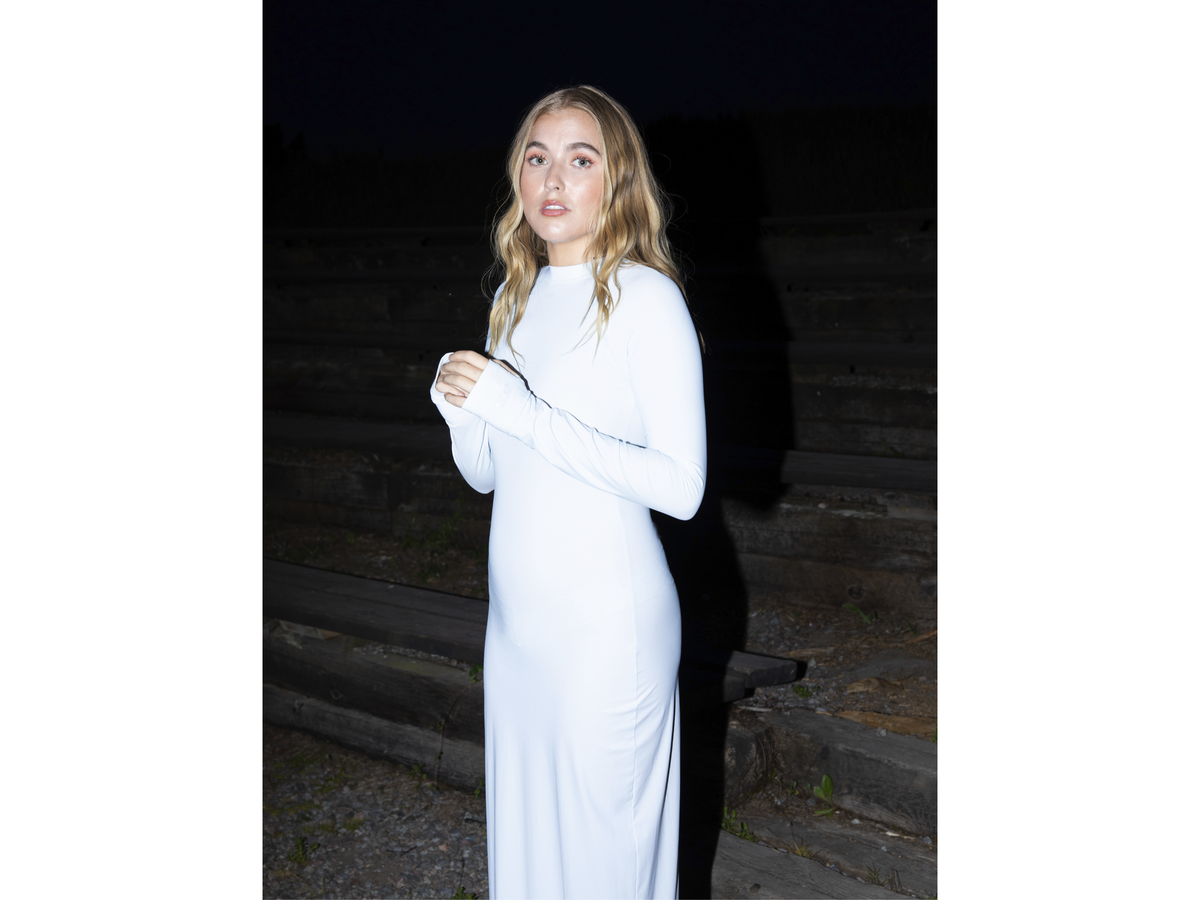
'Hey Mom, Don’t Worry I’m Fine' is the second part of the journey that began with your previous, unusually punky and dark EP, 'Hey Dad, I Tried To Be Nice', earlier this spring. How would you, both in terms of sound and lyrics, put into words the contrast represented by this follow-up EP, judging by the two singles, perhaps you’re not quite out in the light yet, but maybe at least starting to see the light at the end of the tunnel?
Exactly. I think I’m slowly but surely starting to be ready to let the person in question go and put myself first. But it has been a confusing and searching time, I’m not going to lie about that. Something I think you can hear in the music I’ve released throughout the year. If there’s one thing I’ve learned from the heartbreak I’ve been going through, it’s that several emotions can exist at the same time. It’s not always so black and white, or either or. So I guess these two EPs reflect exactly that. Where 'Hey Dad, I Tried to Be Nice' brings out the instinctive response, the initial anger and frustration that arose when everything fell apart, it represents the outer shell of our emotional lives, the part that protects and defends what’s inside. Whereas 'Hey Mom, Don’t Worry I’m Fine' represents the sadness and the loss, but also the realizations and honesty that manage to emerge once everything has had time to settle and time can begin to heal. So both have their own role and significance, and both have been important to write as part of the process of working through everything.
Have you always felt that it’s okay not to just be “yet another pretty popstar”, and to strip away that often so carefully polished façade of pop, and truly stand one hundred percent as yourself. Or has it sometimes felt a little scary and risky along the way to drop the pretty and go nitty gritty?
It feels scary every other day. For me, it’s the constant fight, finding the balance between bringing out what’s raw and true while at the same time protecting and preserving what’s private. I’ve also discovered that it feels especially difficult when I’m right in the middle of my emotions and maybe haven’t yet reached my own conclusions or figured out what I actually think and feel. Then I want to close myself off more than ever, and the more polished façade feels like the more comfortable alternative. But then, once I’ve had the chance to work through it myself and process it in private, it feels much easier to air it publicly. Because then I’m not as vulnerable or as “close” to it anymore, which means I’m not as affected by other people’s input and thoughts. It becomes easier for me to undress, so to speak, and let my listeners in, which is something I want to be able to do. It feels important to contribute to a more genuine and unpolished pop culture.
You were singing very early in life. Perhaps not all that surprising, surrounded by music from virtually every direction. Even a fourteen-year-old Lova was already on stage with an original song, how early did you know there was no plan B?
Pretty much immediately, if I’m being honest. There have never really been any thoughts of doing anything else. It’s what I’ve felt I’ve been good at since I was little, so it’s what I want to do.
What can your creative flow look like. Your songs rarely feel lonely or sporadic, rather, at least from the outside, it feels like you dive into your writing when you have something you really want to say. Now that you’ve released this EP, will you go straight back into the creative process, or will you give it some time until you find something that you want to, or have to, write about?
Yes, that’s really how it is. Which is both a blessing and a curse. I’ve gotten better at forcing myself to be creative and creating something out of nothing. Songwriting is still my job, so it feels important that I’m able to remain reasonably productive even when I don’t always feel super inspired. At the same time, there’s nothing that can kill creativity more than writing for the sake of writing, when your heart isn’t in it. So it’s a delicate balance. I’ve definitely realized that breaks and recovery are necessary sometimes, so I’ve gotten better at taking them when I need to. Because we live in a world where we’re fed thousands of new impressions every day, eventually there’s simply no room left in our brains to take anything else in. So by switching off and allowing myself to be bored for periods of time, I make room for new thoughts and emotions to take shape, which eventually leads to inspiration and creativity.
Does songwriting help you get closure?
A hundred percent! It’s the ultimate therapy.
“Don’t call it the end, we will talk when I’m happy again”. And you and your audience won't have to wait all that long to see each other. On release night, you’re sharing the evening with everyone as you take the stage at Annexet. How does it feel to get to celebrate with everyone?
It’s going to be so lovely to meet everyone again and be able to share this release with them. Sometimes release days can feel a little anticlimactic, because there’s often so much work and so many expectations behind the effort, and if you don’t have anything special planned for the actual day itself, it can easily feel a little empty and lonely. So this feels like the perfect way to end the day, and a great opportunity to celebrate a little.
Though speaking of special things, if you had to choose, what has actually been the most surreal, reaching some kind of of-the-people Swedish stardom at home, or everything that’s happening abroad with listeners, Times Square billboards, and K-pop hits. Or is it simply impossible to choose?
Oh! No, that is an impossible question to answer. Everything feels equally surreal and dizzying. I consider myself incredibly lucky, and I never take any of what I get to experience and be a part of for granted.