VAMELIA TALKS AUTOPSY RESULTS
"Caught somewhere between light and darkness"
 Daniel John
'Autopsy Results' starts from a dire premise, but in looking at the end, seems to find a beginning in it. What was the cycle making this project like, from conception to what you found yourself with at the end?
'Autopsy Results' developed quite naturally over time. I didn’t have everything figured out from the beginning, but as the songs developed, I started to see how they connected and how they could become part of the same world. One thing that really helped define the project is my deeply rooted connection to nature. Even though my music can loosely be defined as quite dark and heavy, it’s the fragility and gentleness that make me want to create. I think that’s what helped me create my style, it’s the mixture of my metal upbringing and environmental sensitivity. In the end, 'Autopsy Results' became something much more connected than I initially expected, with each song reflecting a different part of this world.
With a soundscape already cinematic in depth and scope, how did you translate its haunting beauty into a visual world?
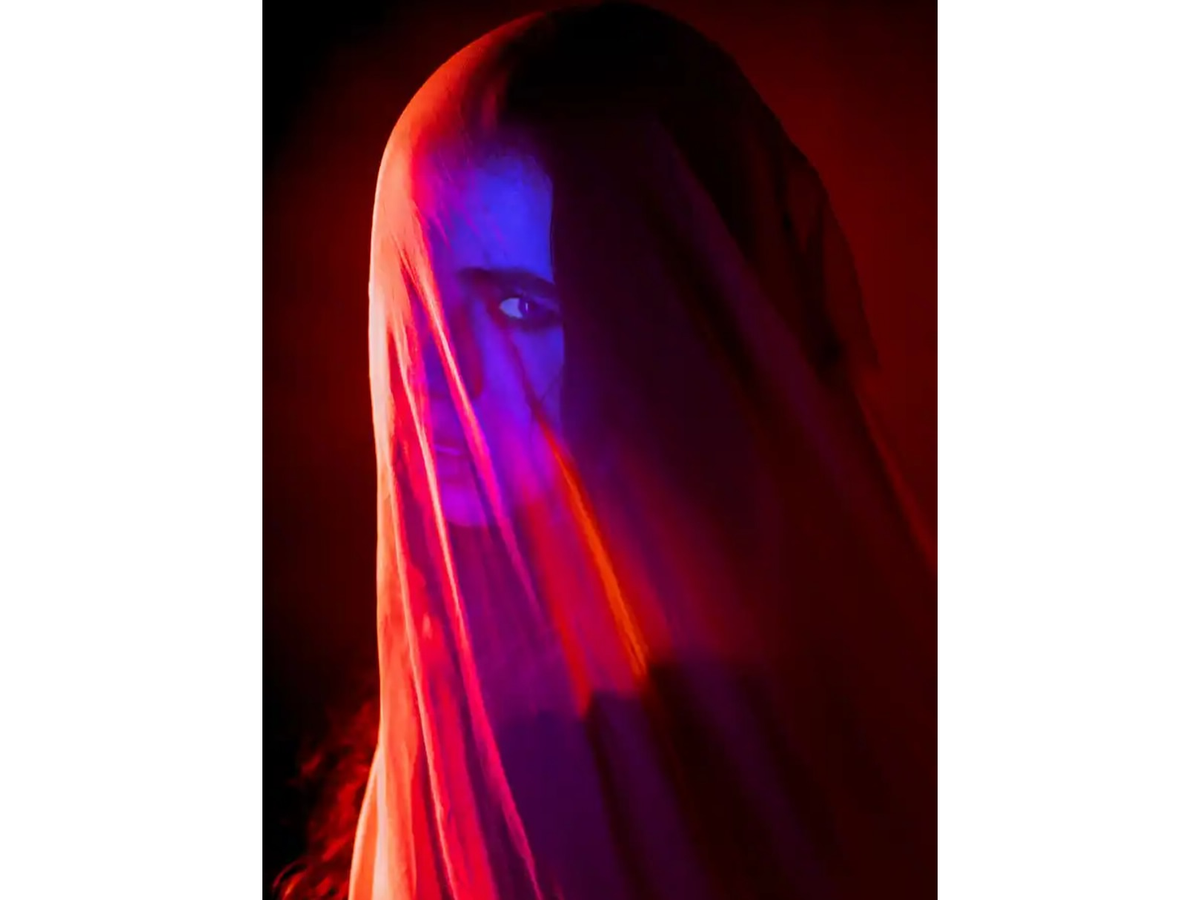
I’ve always felt like my music is drifting around the metal world without truly being a part of it. It feels too atmospheric to fit neatly into the metal scene, but too heavy to exist anywhere else. The idea behind my music has always been caught somewhere between light and darkness, and I wanted the visuals to create that same emotional world. I wanted beauty and decay to co-exist. There’s something so sad about the thought of disappearing, but also something beautiful about watching how the world keeps moving regardless of us. I think those contrasts became the world of 'Autopsy Results', putting softness next to intensity, beauty next to decay. The visuals were created to complement the music and allow the album to be experienced as a complete world, through more than just sound.
What happens with this world when you take it into a live performance, letting it come alive and carve out a place in the physical realm?
There’s something very special about taking music that was created in such a personal environment and suddenly having it exist in a room full of people. A lot of 'Autopsy Results' was written and developed very privately, so finally being able to bring those songs to a stage and share them with an audience feels incredibly meaningful to me. I’ve always loved live music. Since my early teenage years, I tried to attend every local gig I could find, and I always dreamed of being on the other side of the stage one day. As an audience member, I’ve always found it magical to experience something that feels temporary, raw and completely in the moment. That’s something I really want to preserve in my own performances. Because of that, I care a lot about bringing as many live elements of the songs to the stage as possible, raw vocals, live strings, and synth layers performed in real time. I don’t want the live show to simply recreate the recordings, I want it to have its own energy and allow the songs to feel more organic and immediate. That idea is also at the heart of the album. 'Autopsy Results' explores unfiltered human nature, animalistic desires, and the idea of eventually becoming part of the earth again. I want the audience to experience some of that rawness and vulnerability in the live setting too, to feel the music as something physical and alive, rather than just hearing a reproduction of the record.
Where does the start of music sit in the story of your life?
I’ve always been someone who feels things very deeply, but I’m not necessarily very good at understanding or putting those feelings into words. I can never really get away from the noise in my head, that constant, sometimes contradictory mess. Writing 'Autopsy Results' became a cathartic way of expressing some of those feelings that I couldn’t otherwise describe. I started creating the album three years ago, at a time when I thought music could never be more than a hobby for me. I think the fact that I was making it simply because I had a genuine need to create, without deadlines or contracts, allowed me to be completely unapologetic about who I was as an artist. I wasn’t thinking about whether it would fit somewhere or how it would be received, I was just making the music I needed to make. Of course, now that my life has completely changed, there are probably things I would approach differently in my creative process. But I also know that if I had made the album with the mindset I have now, it wouldn’t have the same meaning. The rawness of the music reflects what my mind sounded like while I was writing it, and I think that’s why 'Autopsy Results' will always mean so much to me.
What is your creative process like?
I like to approach my writing process very organically. I usually let ideas develop freely rather than trying to force a song into a particular structure from the beginning. I might start with a melody, a piano idea, a vocal line or a particular atmosphere, and then build around it without necessarily knowing where it's going to end up. I tend to collect different ideas first and only afterwards work out how they fit together. I think human emotions and experiences are too complex to always fit neatly into a perfectly structured piece of music, so I like to leave some room for things to evolve naturally. I want the music to retain some of the ambiguity and unpredictability of the feelings that inspired it. Piano and vocal lines are often where I start, but I don't like to limit myself to a specific routine. Sometimes the starting point is something very small and unexpected, and the song grows around it.
With the finished album now resting under its final sheet, how satisfied are you with the results?
There’s something so nostalgic about finishing things. Music that lived only with me over the last few years is now out in the world, being experienced by other people. At the same time, the melancholy of closing one chapter is mixed with the excitement of opening a new one. This album definitely changed me. As my debut, it taught me what making music truly means to me and helped me understand who I am as an artist. Now it’s time to let other people experience it and make their own connections with it. In a way, it doesn’t completely belong to me anymore, and I think there’s something really beautiful about that. I can’t wait to see what the future brings. I’m excited for both the successes and the obstacles, because I think both are part of the process, and both give me something to learn from and bring into my art.
What might rise beyond the veil now on the other side of this album, where does one go after the end?
There are so many new ideas left in me. I think that because this is only the beginning of my journey in the industry, I have so much curiosity and excitement about every step that comes next. I’m probably the furthest I could be from burnout right now. But even if none of this existed, and I had never decided to give my life to music, I know I would still create. There’s a need to express things in me that never really feels fulfilled, and I think that’s something that will always be there. I hope there’s still a lot left for me to do in the music industry, especially now that I have all these new experiences behind me. So much has changed since I started writing 'Autopsy Results'. I have more courage and maturity now to be honest about what I feel, and I think that will naturally find its way into the music I make next. I can’t wait to share it.