ARCADE BERG TALKS WOLFENSTEIN II: THE NEW COLOSSUS
“Just kept going and stayed within action"
 Daniel John
How did you come to work on a game like 'Wolfenstein II: The New Colossus' to begin with?
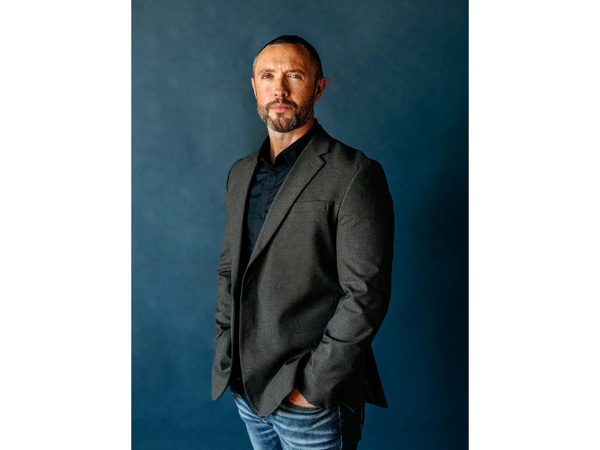
If we go all the way back to the very beginning it was actually my mom who kept pushing me and asking, “What are you going to study!? What are you going to study!?” And eventually I got so fed up that I said, “Fine, let’s do this then!” (laughs) So I googled video game development, I clicked the very first result that came up on Google, and applied to that school. After graduating I had the opportunity to get a job right away and it was at a place called GRIN. After that I just kept going and stayed within action games. I started out as a level–designer, but gradually moved more into game design, because that's what I felt really suited me better. Then I kept working, and was fortunate enough to get to work on good games. And eventually, I ended up at MachineGames.
You jumped straight into big titles like 'Terminator' and 'Gears of War'?
Exactly. 'Terminator Salvation' was my very first game, with its solid forty-something score on Metacritic (laughs). But it was still incredibly fun. It was really enjoyable. It was a very good start. After that I also worked on some smaller games like 'Bionic Commando: Rearmed', and just like you said, I also moved on to 'Gears of War', and 'Bulletstorm', and 'Fortnite', and so on, over at Epic Games. Then when I got the chance to start at MachineGames, it was just like, “Yes, this is something you want to be a part of!” So I’ve been involved in all the Wolf-games we’ve made here, 'The New Order', 'The Old Blood' and now 'The New Colossus'.
The 'Wolfenstein' franchise originated in the U.S over at a Baltimore-based studio. How did the 'Wolfenstein' franchise end up in Uppsala, at MachineGames?
That came about thanks to a collaboration with Bethesda and ZeniMax as a whole. On our side, we said we wanted to make games, and ZeniMax, who owns the IP, basically said, “Well, we have Wolfenstein, what do you say to that?” And people just lit up and practically lost their breath. Wolf, right? It’s huge! It’s such a big name. And at that point we were a completely new studio, one that hadn’t proven itself yet. Sure, everyone at the studio were senior, experienced developers but as a studio we hadn’t shown that we could actually build games, so, we just said, “Yes! Yes! Yes!” Then we also had to prove that we could actually do it. Show “dad” that everything would be fine. And they were extremely pleased, and since then the collaboration has been fantastic and we have just kept going.
How much creative freedom did you have in the beginning?
A lot. Surprisingly so, almost. But that was probably because they wanted something new. And they wanted to see what we were capable of, everyone here has worked on shooters and action games before so I don’t think they ever suspected it would turn out badly or anything, but of course they kept a watchful eye and asked questions, they have their own reviews and discussions, but an incredible amount of what you see is MachineGames, it definitely wasn’t a case of us being handed a sheet of paper and told, “This is what you’re going to make.” So yeah, it was very surprising.
How much did the earlier 'Wolfenstein' games influence your version?
All of it, of course. I mean, we’re carrying on their legacy, so we can’t ignore it. We say this is our 'Wolfenstein', our interpretation, but we still have to take what came before into account. And there have been some fantastic games before as well. 'Return to Castle Wolfenstein' was incredible.
Well…
It was!
Did any of the old guard like John Romero reach out to you in any way?
Yeah, we’ve heard a lot from all kinds of directions. They weren’t involved in development, but it’s incredibly fun to see and hear what people think. And these people are legends. That’s one of the things I find so cool in general about working with the people I work with now, including id Software, it is kind of like, “Do you guys even realize who you are!?” These are people I grew up with, so that’s pretty amazing.
When did you start working on this sequel?
That’s a really hard question to answer properly. But we’ve been working on it for roughly around three years now. Even while making the first game, the seed was already there, we always wanted to do a trilogy, if the first one did well, if people liked it, if it sold well. And all that. So we started laying groundwork already back then. The people writing the story also started earlier than everyone else, since the story needs to be finalized before you can plan anything else, production-wise. Just questions like, “Okay, how many locations do we have? How many characters?” and so on. So the answer really depends on who you ask. Some people started working on this while others were still working on 'The Old Blood'. It is very difficult to give a single answer.
I think you answered it rather well. Was there something you immediately knew you wanted in the sequel?
One thing we really nailed in the first game, and something that also became very clear from reviews, was that 'The New Order' was very strong narratively. It was incredibly story-driven, but, at the same time, it wasn’t a walking simulator, there was a powerful game there as well, people really appreciated the balance between those two sides, that there was a good story, but that it didn’t get too much in the way, and that you still got to actually play a lot. That’s something we were very careful about this time, not tipping too far in either direction. We wanted a similar balance. At the same time, we’ve improved it even further by, well, if it’s a pure cutscene, then sure, sit back, watch, enjoy. But as long as you’re in the game, we make sure the player always has much more freedom. We never take control away from you. Things happen around you while you’re playing. It’s also about small details, like when you pull a lever, you still notice that you can move your body, you don’t suddenly become completely static. This is because it’s you. It should always be you. So a lot of effort went into merging narrative and gameplay. That was one of the strongest things, and something many people were surprised by when they played 'The New Order'. It was like, “Wait, Blazkowicz is a character? And there’s a story? And now I’m actually angry at the Nazis for more than just the fact that they’re Nazis?” You know, that was something we were very keen on preserving.
What is it that makes Nazis such good enemies?
Nazis are very convenient. The threat in our game is an interpretation of Nazism, it’s not about individuals. But they really are the classic evil. So we get a lot for free, in that we do not need to explain or motivate why you should dislike the antagonist or why you’d want to kill Nazis. That’s very convenient. The challenge for us, instead, has been to make it more interesting than just shooting members of this “entity of evil.” That’s why we’ve added strong characters. In 'The New Order', for example, we had Bubi, and we had Engel, who also returns in this game. The idea is that there should be faces on the other side as well. Faces that, in a way, build motivation within the regime, so that there are people you can actually resent.
Unfortunately, there are quite a few Nazi-winds blowing outside the window today, was that something you carried with you during development?
No. We have been working on this for so long that it was not really a topical issue during development. And we are not making a statement with it either. We haven’t corrected or changed anything in the game. The world happens, and the world will continue to happen. We do our thing. And in ten years, our game will still be there, and it will have to stand on its own then.
Story-wise, the first game ended a little bleakly?
(Laughs) But you did win!
Where does the story pick up in the second one?
Right there. Exactly where the first one ends. And now I need to be careful, or people might get upset. But B.J. didn’t die, and the Nazis continue to expand. That’s how they reach the U.S. B.J. is in very bad shape, he’s in a coma for a while, and during that time, the world continues to change. When B.J. wakes up, he’s broken and worn out, but he’s still who he is. So he goes into battle anyway, determined to set things right. One thing we often say about B.J., to really help people understand him as a character, is… wait, have you seen, or maybe even played, the wheelchair sequence?
Seen it, but not played it…
A question we often get about that is, “What were you thinking there?!” But the whole idea is that he’s broken, but never weak. Even in a wheelchair, you can perform melee takedowns and things like that. It is a way to show that he is always strong. That is where we are coming from. We have a broken B.J. and a broken America, and you’re meant to rebuild both.
Why take 'Wolfenstein' to the U.S. this time?
Partly because we wanted something new, something less obvious. 'Wolfenstein' usually stays in Europe, and what’s so exciting is that we have this “what if” filter, “what if” the Nazis had won and continued to expand? That’s a lens we can use whenever we want to nazify something. What’s really cool, even for us as Swedes, is that we already have such a strong image of 1950s–60s America through pop-culture. Diners, roller skates, milkshakes, all of that. It’s such a strong, cool image. Putting a Nazi filter on that is incredibly exciting. And it’s not something we have seen done in the way we're doing it.
How does that filter change the America we know?
Throughout the two previous games, we’ve already figured out what we think nazification looks like. We use brutalism, lots of concrete. That’s stuff that has happened and is fictionally continuing to happen, it’s cool to see the world changing in the game. For example, there are people who still speak English, and then Nazis might say, “Nope, it’s time to change language!”, there is a lot of that. It’s pretty exciting. And there are still lots of rebel groups moving around too.
Does the game only take place in the U.S.?
I’m not going to comment on that…
Spoiler alert?
Exactly! (laughs) You have to be careful, otherwise “dad” gets mad.
Gameplay–wise, one of the biggest new features seems to be weapon combinations?
Yeah, exactly. One thing that was very popular in 'The New Order' was dual wielding, back then with two-handed weapons. It was fun to take that further in the sequel, so now you can mix weapons freely however you want. I personally prefer stealth, so I like having a silenced pistol in one hand and a silenced assault rifle in the other, as a backup if things go wrong. It’s fun to see how people mix things, some go close-range and long-range, some still run two shotguns. Which is obviously a valid choice too, but yeah, this is pretty new. It was a huge technical challenge to make it work actually, but I think it adds a lot, even just in terms of how many ways you can choose to play the game. It really opens things up.
So it’s not just different weapon combinations but holding onto multiple strategies at once?
Yes, exactly, and you can switch between them so quickly!
To wrap things up, with PR–people now hovering behind us, what do you think is the core of what makes 'Wolfenstein' what it is?
I think the core is that there’s a lot of exploration. And I don’t just mean discovering a map, but also historically, 'Wolfenstein' has always had hidden doors and alternative paths. Even from the very, very, beginning, that was a thing. Then there’s the stealth and all of that stuff and it's important that all of these elements are present, because if we start removing stealth, or hidden treasures, even if you as a player choose not to care about those elements, which is totally fine, they still need to be there. Because if we remove them, we eventually end up with something fairly generic. And I think that is what really matters! That is 'Wolfenstein's DNA!