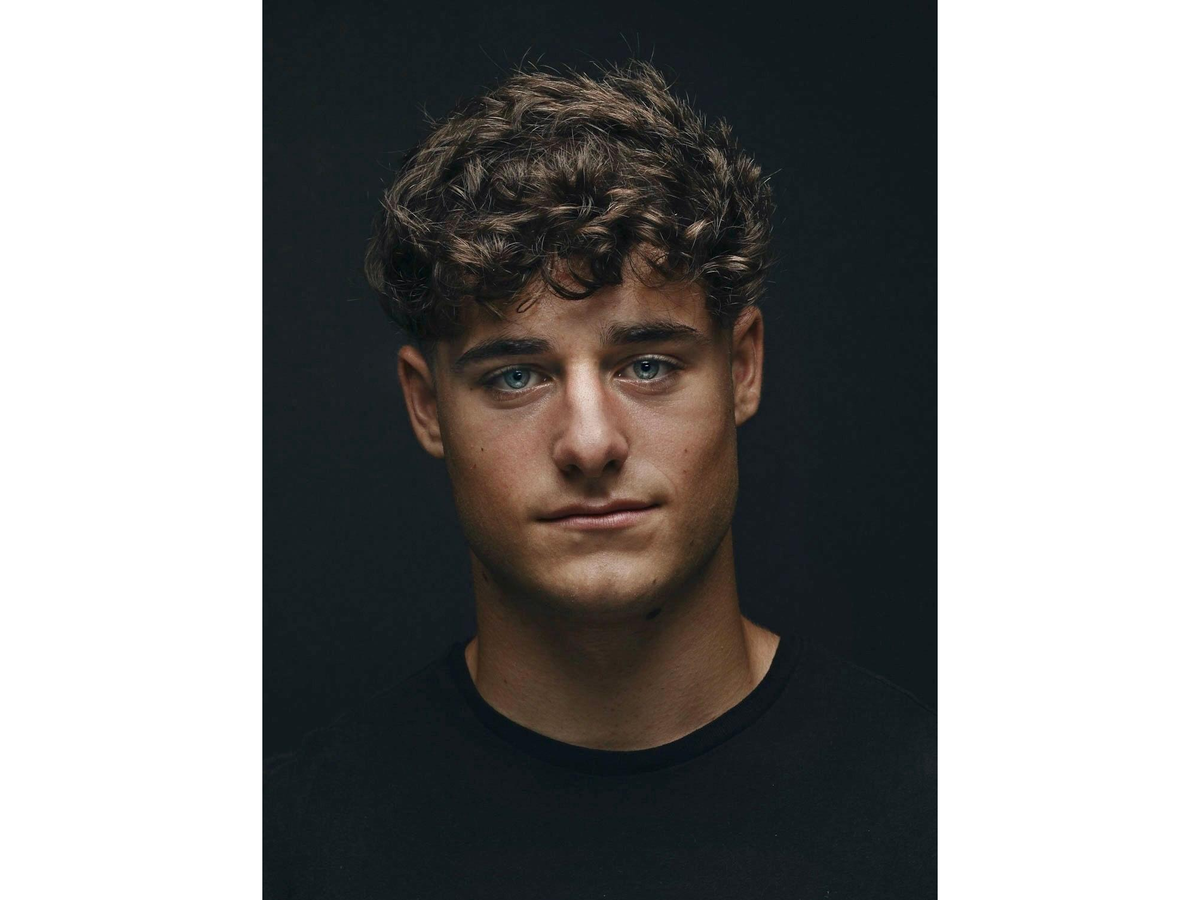
GIO URSINO TALKS RED PLAGUE
"I am an impatient person by nature"
 Daniel John
Filmmaking can be quite a long journey. Where did the vision for your first feature film set into motion?
The first time that I really started to think about 'Red Plague' as a feature came around mid-2022 shortly after the completion of my first short film. I started writing it initially with the idea that it would be a longer short, maybe around forty-five minutes. But as the story grew, I began to wonder whether I could make it a feature. I was still in college at the time, and knew most filmmakers don’t get the opportunity to make a feature until much later in their careers but I am an impatient person by nature and I didn’t want to wait years to make something I knew I could make now. I didn’t have any expectations for it in terms of festival and distribution performance. In fact, that was the least pressing thing on my mind. I mostly made it to prove to myself that I could and that I didn’t need to rely on the permission of others to do something I loved. The fact that it ended up getting distribution was kind of icing on the cake.
'Red Plague' is set against a fantastical backdrop amid what little remains of the world after a plague but at its core it’s a deeply human reckoning of confronting old wounds and rising again even at the most broken. With so much else lost around them, what is it Daisy and Carter find in one-another that they wouldn't have by wandering alone?
That’s a great summary of the heart of the film, very well said. Carter certainly is a lost and broken man after the loss of his family early in the pandemic, and that trauma affects the few relationships he does develop in the following years, preventing them from growing and keeping him from really healing or moving forward. Then comes Daisy. She really is the yin to his yang. Where Carter is jaded, distant, closed off, and quite pessimistic, Daisy is hopeful, optimistic, and sensitive. Some of that might come from her being born and raised in this new world, not having a sense of what life was like before. This is her normal. Even still, she sees the best in it, more so than most. For Carter, she provides a fresh set of eyes through which to view the world. A certain innocent perspective he’d forgotten. Through her persistence in the face of Carter’s many emotional walls, she begins to help him to see the beauty in the world, again. As for what Daisy finds in Carter, you’ll just have to watch the movie and find out.
Why do you think you have this need to put stories out?
I’ve been a storyteller since before I can even remember. A few years ago my parents showed me journals I wrote when I was a kid full of made up stories that I don’t even remember writing. Most of the words were misspelled and some of the letters were written backwards, but they were stories. I was constantly coming up with them. I can’t really say that something inspired it, it’s just the way I’m wired. Storytelling is how I express myself, process the world, and ultimately it’s the thing that makes me feel the most fulfilled. I get antsy if I go too long without creating something. In terms of filmmaking specifically, it’s really the medium that I feel allows me to tell the most complete and immersive stories. I grew up as a visual artist, drawing and painting. I loved to write too. And I’ve always been fascinated with music and how powerful it can be in terms of heightening emotion. Alone, each of those mediums can only do so much, but all together, they can really transport you somewhere else. That’s a film, and that’s how I realized filmmaking was the medium I wanted to work in.
Growing up drawing and painting, are you still very visual in your preparation?
Absolutely. I’m a very visual thinker, and I need to see things laid out in image form to process and plan. I storyboard all my films, which basically means drawing out the individual shots, kind of like a comic with notes and camera and performance directions. That helps me visualize the scene and how it will cut together before we even shoot it. I find it extremely helpful and a huge time saver on set. I already know exactly what we need to get and how we’re going to get it by the time we start shooting. That was the only way we were able to pull off 'Red Plague', with such a limited budget on that film we could only afford to pay for about twelve shoot days once we calculated the cost of renting gear, locations, and paying cast. Shooting an entire feature in twelve days was not easy and it wouldn’t have been possible at all unless I storyboarded everything meticulously and wasted no time on set thinking about what we needed. Even with all that prep we were still running right up against the clock most days. Long story short, storyboarding is my best friend.
You took on so many different aspects of this production, which probably comes naturally on a passion project like this. But what was it like managing so much of everything?
It definitely was a lot. As you said, this film was a huge passion project, and like I mentioned earlier, I wanted to prove to myself that I could do it. We had a very small crew made up mostly of friends and classmates who were generous enough to volunteer their time. Our budget was even smaller. That meant I had to take on a lot. But I’d be lying if I said I did it solely out of necessity. I really enjoy being involved in different departments. Aside from writing and directing the film, I worked on the wardrobe and props, creating many of them by hand in my garage. I handled casting, budgeting, location scouting, storyboarding, editing, visual effects, marketing, and more. It was the busiest, most stressful year of my life, but also the most rewarding. It makes the final product that much more personal when you put your all into it like that.
Do you feel you’ll do that in the same way again?
I think it really depends on the scope. I hope to continue making larger films as my career progresses, and so that style of filmmaking may not be possible, but I will always try to be involved in as many aspects of a film as I can. When it comes to short films, however, that is definitely my favorite way to work.
Beyond your artistic work you’ve also excelled as a football player. Did you ever feel your athletic ambitions and your creative side were at odds?
I never really felt like film and football conflicted too much. But that was partly out of design. I attended film school at Chapman University, which was one of the few schools in the country where I could feasibly play football and study film. Other schools, like USC or UCLA, have high level football and film programs, but they are too intensive and time consuming to do both simultaneously. Chapman provided a unique balance between the two, with a nationally ranked film school and division III National Collegiate Athletic-program. That’s why I really wanted to be there. I got to be fully involved in both things, playing four years of football and making several films throughout my time there.
Sports can be very result-driven, does the same pressure to measure up against others come through in the film industry as well?
That’s a really great question. Self comparison and results-based success are things that I struggle with a lot. I don’t think they’re necessarily helpful for anyone, and especially not artists. Art and film specifically are so subjective, it’s fascinating. One person can adore a certain film and think it’s the greatest thing in the world and the person sitting right next to them could think it’s absolutely terrible. Same film, two polar opposite opinions. That discrepancy is so dramatic, how is a filmmaker supposed to reconcile that if they stake all their success on the opinions of others? I’m still learning how to judge my own success based on my own satisfaction, but it’s difficult. The film industry is a competitive business, and it's based on hard numbers. If you want to be a successful, working director, your films need to make money. There’s a fine line to walk between focusing solely on your own satisfaction, and looking at external performance. That’s something I have to continue perfecting. At the end of the day though, the most important opinion you’ll hear is your own, if you’re proud of your work, then it’s a success. That isn’t dependent on anyone else but you.