JOHN-PAUL PACE TALKS NOT WITHOUT HOPE
"People kept telling me I should act"
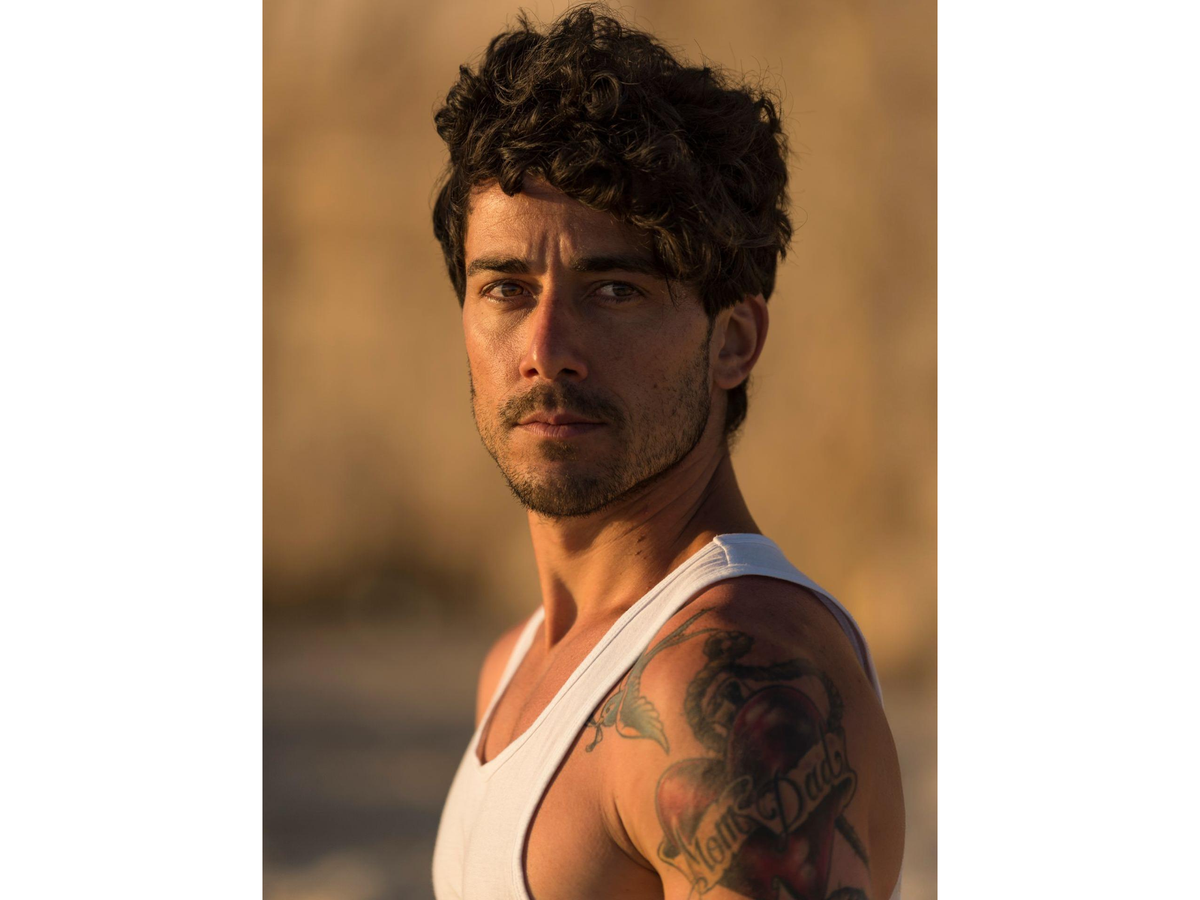
 Daniel John
Based on a New York Times bestseller, what hit you as the most powerful when you first read this story. Had you heard of it before?
It was actually my first exposure to the story. When I received the script, I immediately went away and researched it to see whether it was true, and discovering that it was made it land even harder. What struck me most was how fragile life can be. These were capable, successful people, and yet something as simple as a day out with friends could suddenly turn into a fight for survival. That idea always hits me, life can change in a moment. A long life isn’t guaranteed, no matter how healthy you try to be. Sometimes it’s bad luck, sometimes it’s timing, sometimes it’s someone else’s decision, and suddenly the ground shifts. I was also gripped by how avoidable the situation seemed in hindsight. There’s a single decision early on that sends everything spiralling into chaos, and it’s a sobering reminder of how small choices can carry enormous consequences. As an actor, I naturally put myself into the shoes of the people living it. But honestly, I think that’s human as well, you hear a story like this and you start asking yourself, how would I respond? How long could I hold on? Would I stay calm? Would I panic? And even though my work might suggest I’m a fearless ocean-guy, I’m not a big fan of wild open water. I love the sea, but I respect it. The ocean feels tied to my DNA in a strange way, my family is Maltese, from a tiny island shaped by seafarers, harbours, and history. My father traveled to Australia by ship. And as someone who loves road trips and adventure, the sea has always felt like the original highway, the route that took people toward new lands, new lives, and new discoveries. So this story hit me on two levels, the wonder of the ocean, and the reality that it can turn on you without warning.
Was this entirely filmed on a studio stage?
My scenes were filmed on location on a large ship in Malta rather than on a studio stage. The ship was docked rather than out at sea, but the production team used special effects, water hoses, wind, and lighting to recreate the chaos of the open ocean.
Does such a controlled environment help performance?
It was a smart setup because it allowed us to feel immersed in the environment while keeping safety in place. Being on a real vessel definitely helps your imagination as an actor. You can feel the scale of the ship, the sea air, the movement, and the sounds around you, all those details contribute to authenticity. And at the same time, having that safety net lets you commit fully without a part of your brain holding back because you’re worried about actual danger. So yes, a controlled environment helps! But the fact that we were on a real ship also gave it a genuine texture that you can’t really fake.
Any thrilling moments that stood out?
A “thrilling” moment for me was simply witnessing the machinery of filmmaking when it’s trying to recreate nature, water effects, wind effects, the physicality of it, the coordination, the discipline. It reminds you how many moving parts it takes to create a few believable minutes on screen.
In a large ensemble as this, what was it like riding out the storm with the brotherhood on set?
The set energy was strong. I spent time around director Joe Carnahan, and the cast I worked with, including acting opposite his son Rocky Carnahan. Rocky is a great actor, a genuinely good man, and funnily enough he’s also been a supporter of my diner business here in Malta, Gemma Joe’s, which I love. Even though I wasn’t on the full run of the shoot, there was a real sense of camaraderie in the environment. When a production is built around survival, endurance, and brotherhood, it’s interesting how quickly those themes show up behind the scenes too, people look after each other.
Known for high-energy, character-rich films, how did you find working with director Joe Carnahan?
Joe has a great energy about him. You feel his passion for story immediately, and you also feel that he genuinely enjoys actors. What stood out to me most was how supportive he was. He created an environment where you felt welcome and valued, regardless of the size of your role. There’s a confidence he gives you as a director, almost like he hands you permission to be present, to bring your instincts, to contribute. Some directors prefer to control every detail. Joe wasn’t like that with us. He trusted us to find the truth in the moment rather than force a performance into a strict mould! That freedom makes actors better! And it makes the work feel alive.
Ever since landing your first role in Steven Spielberg's 'The Pacific' mini-series, much of your work seems connected to the sea?
It’s funny, it wasn’t something I consciously chased, but it keeps happening. I’ve been fortunate to land roles connected to the military, naval environments, or stories involving the sea, from 'The Pacific' to 'Das Boot', 'The Good Ship Murder', and now 'Not Without Hope'. I didn’t go out with a mission to collect “sea roles” but they’ve kept finding me. Maybe it’s simply casting, maybe there’s something about my look that reads “naval” or “military”. But there’s also something personal there. My Maltese heritage is tied to an island shaped by harbours, seafarers, and Mediterranean history. My father traveled to Australia by ship. And I’ve always loved the symbolism of the sea, danger and beauty side by side. I’m also a road-trip person. I love movement, discovery, new horizons. And in a way, the ocean feels like the original road trip, the old world’s highway into the unknown.
So just coincidence?
Yes, it may be coincidence, but it’s also a theme I’ve grown to appreciate.
You once carried athletic Olympic dreams as a distance runner, what got you to switch paths toward acting?
Sport was a huge part of my life growing up. I originally loved basketball, but eventually I realised I probably wasn’t going to grow tall enough to pursue it seriously. What I did discover, though, was that I had a knack for endurance. At my sports high school I broke several performance records and scored very high in maximal oxygen uptake-testing. I remember my school principal coming to speak with me personally after one of those tests and insisting I join the athletics program, not realising I’d already joined. That’s a small moment, but it stayed with me because it showed me people could see potential in me, sometimes before I fully could. Running became a serious focus, and I was genuinely pursuing it as a potential Olympic pathway. But around 2000–2001 I developed a severe ulcer flare-up in my large intestine that made intense training dangerous. That forced me to step away from running. Around the same time, I met someone deeply involved in the performing arts. Singing, dancing, acting. And it reignited something that had always lived in me. As a kid, I loved drawing, writing poetry, and storytelling. That creative world started coming back. Over the next few years, people kept telling me I should try acting, and eventually I stopped resisting it. At twenty-three I took the leap and enrolled in acting schools in Sydney, including Screenwise and NIDA, the National Institute of Dramatic Art. Two years later I was living in New York, pursuing acting professionally, and looking back, it feels like life simply redirected my path, from physical endurance to emotional endurance, from sport to story.
From Stockholm to Copenhagen, you’ve spent some time here, in Scandinavia. What brought you here?
Curiosity, and a love of culture. Once I began pursuing acting internationally, it naturally opened the door to traveling and experiencing different parts of the world. Scandinavia always fascinated me. The landscapes, the calmness of the people, the design, the atmosphere. I spent time in places like Stockholm and Copenhagen meeting people, exploring, and soaking in a totally different rhythm of life. I’ll admit there was also the simple human element. Scandinavians are strikingly beautiful, and coming from a Mediterranean background with darker features, I always found that contrast fascinating. But if I’m honest, one thing that made me hesitant about staying long-term was the winter. People warned me more about the darkness than the cold, months with very little sunlight, and it genuinely gave me pause. I am someone who thrives on energy, movement, light, and momentum. So the idea of that kind of seasonal darkness was intimidating. In the end, I continued traveling and exploring elsewhere, but Scandinavia remains a part of the world I remember very fondly.